Where It’s Working
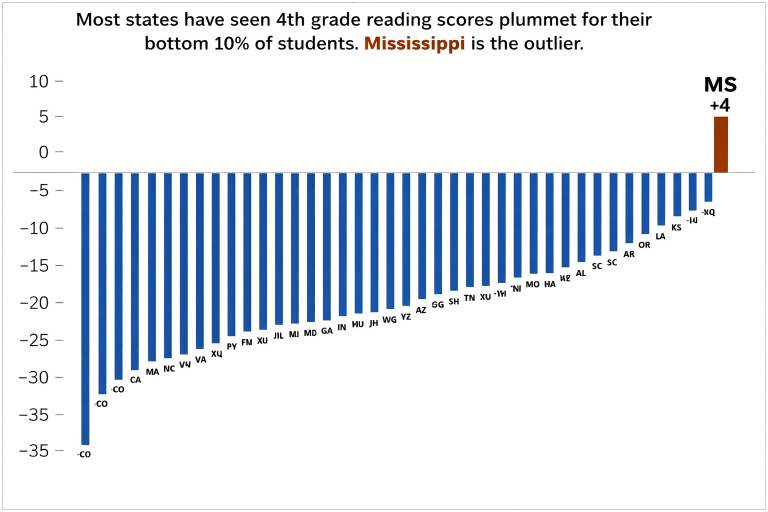
The Mississippi Miracle
Led by visionary State Superintendent Dr. Carey Wright, Mississippi—once near the bottom in U.S. education—has transformed literacy. From 49th in 2013, it now ranks top 20 in 4th-grade reading (2023). Driven by evidence-based early literacy reforms & teacher training, MS offers a proven roadmap to close reading gaps nationwide.

What can the US Learn from England's Rise in Reading Scores?
Over the years, reading test scores in England have steadily risen, bringing the country near the top of international rankings. Prior to phonics and numeracy mandates in 2011, 33% of students were proficient. By 2019, after eight years of implementation, proficiency had risen to 82%, vaulting the country to top global ranks. Nick Gibb, the reform’s architect, shares insights here.

Louisiana's Leap
Under Dr. Cade Brumley, Louisiana leapt from 49th to 32nd on NAEP. Fourth graders now rank 16th in reading, topping U.S. growth for two cycles. His “back to basics” push: Science of Reading plan, renewed math foundations, K–3 screeners, & high-dosage tutoring. Result: highest-ever rankings, one of the fastest-improving states.
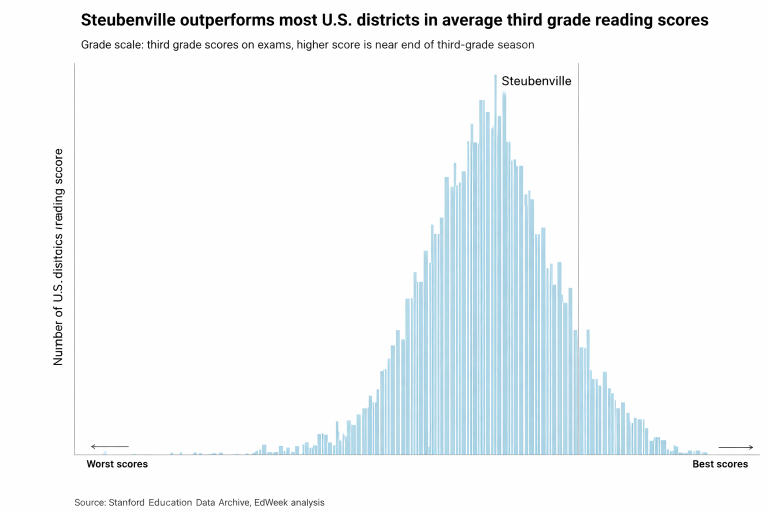
Steubenville's Success
Steubenville became a model of reading success. Then a new law in Ohio put it all at risk. In this episode of Sold a Story, Emily Hanford looks at the “science of reading” lists some states are making, why Steubenville’s 25-year-old program isn’t making it on these lists, and the surprising power of one curriculum review group.
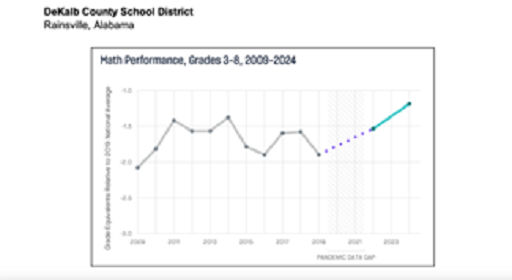
From Last Place to Rising Stars
Julie West led DeKalb County, Alabama in developing a hands-on, tactile math curriculum that builds a strong foundation for fluency and treats mathematics as a language. Central to the effort was coaching teachers in how to effectively deliver it. Now, Alabama is the only state where fourth-grade math scores exceed 2019 levels.
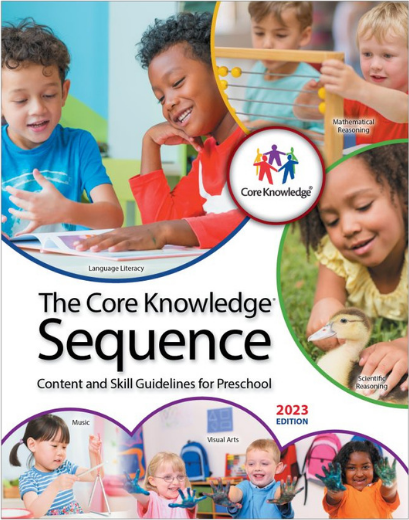
Core Knowledge Schools
Studies on Core Knowledge in U.S. schools are highly favorable. Growing evidence shows it drives excellence through better student performance, greater enthusiasm, and strong foundations for future learning. It promotes equity by giving all students a rich curriculum and narrowing gaps between high- and low-performing students.